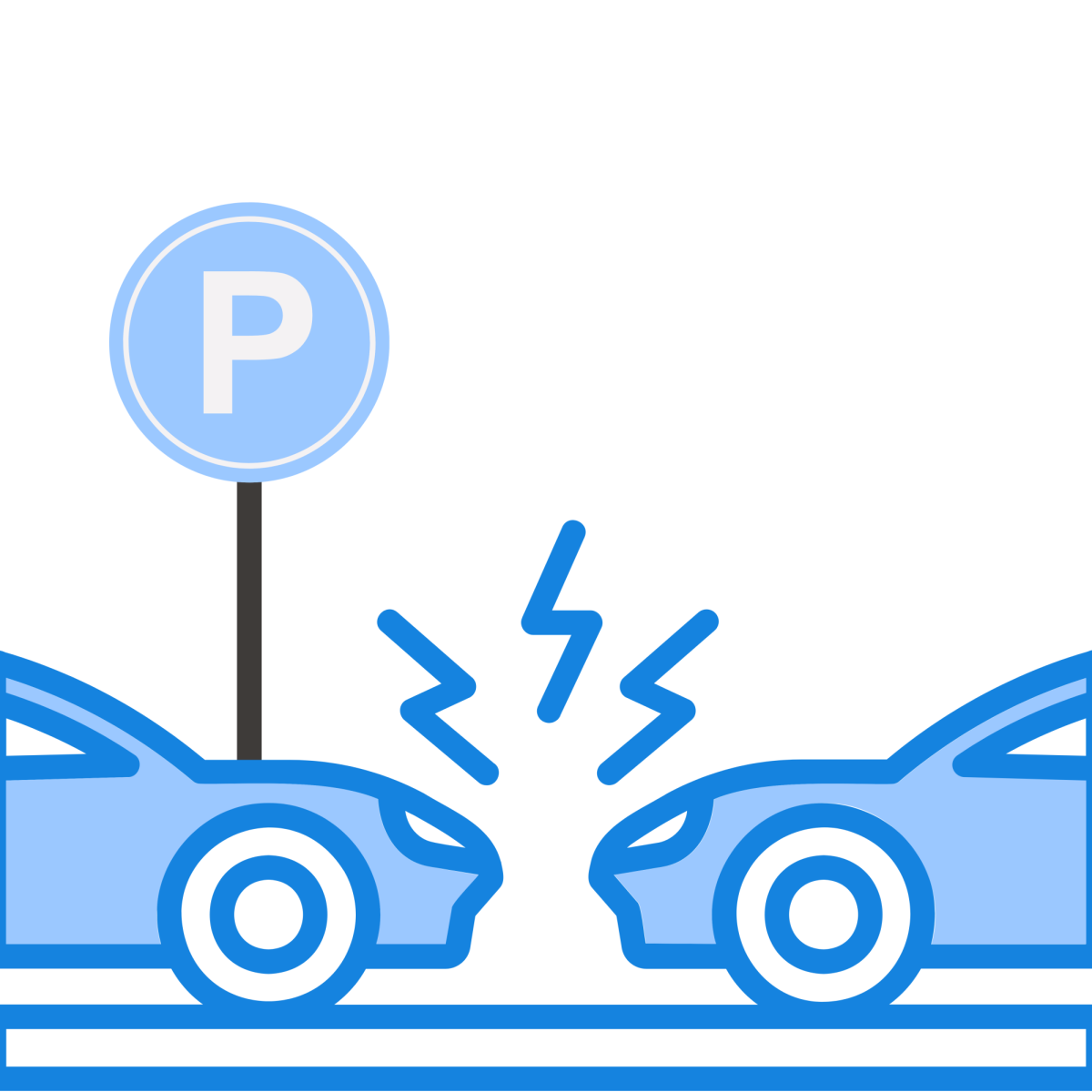
It’s 3:03 p.m. You open your car door and slide quickly behind the wheel. The soft purr of the engine fills your ears as you shift into reverse. After a brief glance into your review mirror, you back up sharply. Bang. You halt forward in your seat as your vehicle abruptly collides with another. Your initial thought: surprise. Your second reaction: panic. Whose car did you hit? Are they okay? Should you drive away? Call the school? This is the thought process that may run through the mind of a high schooler after being involved in a parking lot accident.
For many high school students, this scenario isn’t hypothetical. A to the National Safety Council, nearly 50,000 crashes occur in parking lots and garages annually, and young drivers are all the more susceptible to it. Whether they are in a rush, or merely lack overall driving experience, many high schoolers find themselves in tricky situations within the school parking lots, and oftentimes they don’t know how to respond appropriately.
Parking lot accidents can present themselves in a variety of forms: sideswipes, fender benders and door dings. Southeast senior Elise Weisser was once backed into in C Lot after school. She wasn’t injured, and both drivers handled the mishap responsibly. Still, she understands that accidents similar to her own are common with young drivers, and knows of several students who have been involved in other accidents in the Southeast parking lots.
LSE Assistant Principal Crystal Folden says that parking lot accidents typically occur about once a month at Southeast. As of mid-January, at least one accident had already been reported this semester. However, this brings another question into consideration: how often do students confess to damaging another vehicle in the school parking lots?
“[About] 50% of the kids come and tell us they hit somebody,” Folden said. “And 50% of the kids come and say they’ve been hit.”
Ideally, according to Folden, if a student has been involved in an accident, they should first assess any damage to the vehicles involved. Then, if the owner of the other vehicle is not present, they can leave a note stating the situation, along with their contact information–such as their email or phone number. However, if the other individual is at the scene, talking things through with them is advisable. Finally, taking pictures of the accident and reporting the mishap to the main office is critical. By doing so, the school can then document the accident and assist with any legal issues or questions. Ultimately, it’s important to take as many actions as possible, to ensure that fault is accurately determined.
Folden also stated that students should take a picture of the other vehicle’s license plate–if the individual is not in their car at the time of the accident–and LSE staff can help students determine who the vehicle belongs to. Folden, or other office personnel, can then call both students in and speak with them about the next steps.
Of course, prevention is better than paperwork. Students can reduce risk by putting phones away while driving, turning down the radio, staying attentive and alert, using all mirrors, driving slowly and trying to arrive at school early.
As Weisser put it, “With more thought, a lot less accidents will happen.”