
Performative
Lately, almost everything seems to be labeled as “performative”. From the clothes people wear to the activities and hobbies they pursue, performativity is embedded in everyday life. On social media, it often seems like every other video is someone criticizing other’s actions, appearance or labeling them attention-seeking. However, this idea of performativity has spread far beyond trends or aesthetics. It now appears in serious conversations, including activism.
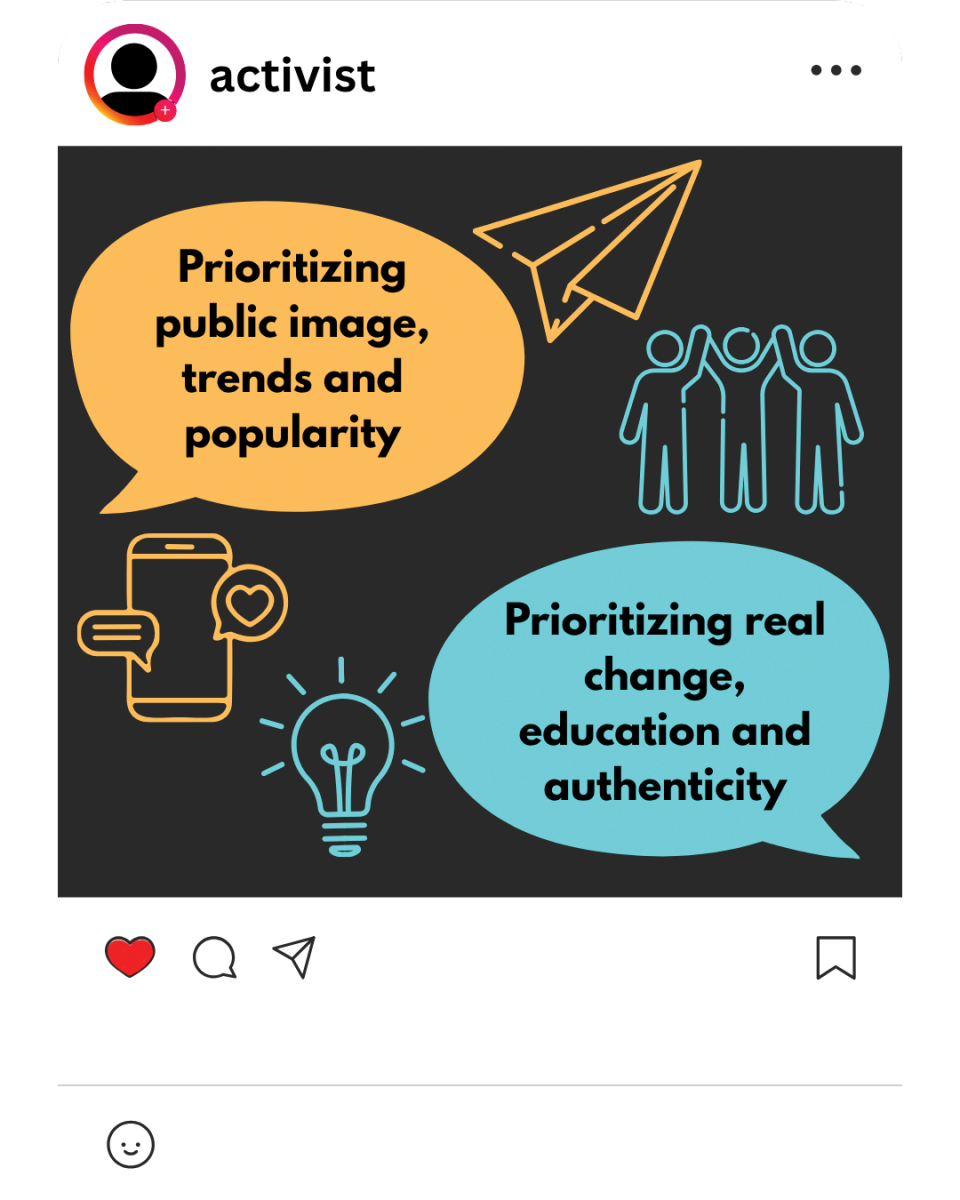
According to Boston Medical Center, performative activism, or performative allyship, is a term used to describe activism that is done to increase one’s social capital rather than their devotion to a cause. This often shows up in social media activism, where posts, hashtags or statements may be shared more for appearance than impact.
The problem with performative activism is that it creates a disconnect. It raises questions about true authenticity, accountability and motivations behind posts and public displays of support.
For many, participating in this type of activism by posting online gives positive reinforcement from others, encouraging them to keep posting. According to Global Brigades, an international non-profit that helps communities achieve their health and economic goals, it can be difficult to identify performative activism in your actions because of this positive reinforcement.
Digital performative activism is hard to call out because someone’s true intentions are hidden behind the screen.
According to LSE English teacher Adriana Martinez, “the line [between authentic digital activism and performative behavior] is the motivation behind the act.” If a group or individual is motivated by their own gain, then it’s not genuine.
The real problem with performative digital activism is that the primary purpose is not to spread awareness or create change. Primarily, it is for the purpose of “elevating the status or public image of the person or group displaying the concern,” Martinez said.
Although many instances of performative activism happen on the individual level, this term can also apply to corporations and brands that publicly support certain causes but fail to follow through in meaningful ways.
These situations often occur during Pride Month or Black History Month. Companies may share posts recognizing these communities, yet their policies don’t match their online message. Especially with the recent nationwide rollback of diversity, equity and inclusion (DEI) initiatives, some companies are showing more hypocrisy than ever.
However, one unique aspect of performative activism is that it is not always harmful. Although it is done for selfish reasons, the effects don’t always reflect this.
“It’s possible for there to be a positive outcome from performative behavior, but that’s indifferent from genuine behavior,” Martinez said.
Although all types of digital activism can have some impact, especially by raising awareness, authentic digital activism is much more effective at creating meaningful change.
Authentic
We are living in a world full of nonstop posts across countless social media platforms. Every scroll presents new causes, crises and calls to action, all condensed into a single image or short-form video. While this content can shift away from raising awareness towards performative posting, this isn’t always the case. Authentic and meaningful digital activism can make a huge difference, especially when it moves past awareness and into action.
According to Britannica, digital activism is a form of activism that uses the internet and social media as a platform for mass mobilization and political action. When used intentionally, social media platforms can educate people, bring awareness to important issues and create real change.
Reaching people on social media is now easier than ever. “People likely use social media because it’s trafficked by massive amounts of people, many more than can be reached physically,” Martinez said. This means that digital activism can often contact many more people than traditional activism, allowing for worldwide connection.
In addition, social media has shown to influence people significantly, making it a powerful platform for social change.
“Facebook was found to be hugely impactful in the last three presidential elections,” Martinez said. “That establishes the digital sphere as one that many in the US spend enough time on such that it impacts their behaviors (voting).”
Digital activism also gives young people an opportunity to begin standing up for themselves and fighting for their beliefs. Online connection is often easier than boycotting companies or organizing protests, especially due to young peoples’ lack of independence and resources.
While social media has proven to be impactful for individuals, it has also helped certain companies spread their messages. One company who has seized the opportunity of digital activism through social media is Patagonia.
Their mission statement, “We’re in business to save our home planet” describes the basis of their goals. Patagonia aims to use the resources they have as a popular company to do something about the climate crisis. Their instagram reflects this instantly.
One recent post highlights their latest book, “Protest”. It highlights scenes from dozens of protests throughout history, many of them focusing on the climate crisis.
Patagonia has 5.4 million followers on instagram, and is obviously using their popularity to spread information and bring attention to an issue that they deeply care about.
Beyond social media, they are a prime example of dedication and commitment towards real action to support a cause. Since 1985, Patagonia has pledged 1% of sails towards the “preservation and restoration of the natural environment,” according to their website.
Patagonia is just one example of how companies and corporations can use social media to authentically support a cause. In addition, they showcase why it is essential for companies to go beyond digital activism, and turn their words into action.
For both individuals and companies, social media has become critical for social change. Most importantly, it has created space for people to “engage productively with like-minded others,” Martinez said.