It’s 6:30 am, and your alarm beeps loudly. You drag yourself out of bed, pull open your dresser drawer and assemble the day’s outfit. This is a universal experience, but choosing one’s daily attire goes beyond just getting ready for the day: it expresses the person beneath the clothing.
The clothing that someone wears can show what general styles are common within certain parts of the world. LSE sophomore, Jumana AI Khazraji, came to the United States from Iraq in 2023 and has gotten to see some of those different clothing choices.
“A main difference that I noticed is the quality. In America, a lot of people like students, teachers, where a lot of polyester. For example, when you clock in for work and you wear your uniform, it’s mainly polyester. Or if you buy something from America, like a purse, you’ll notice it’s always says made in China or made in Cambodia, which are the main two places where unethical products come from.”
In addition, Al Khazraji noticed that in Iraq, a lot of people dress more “moderate and modest” due to religious beliefs. She also notes the differences in how clothing is used in Iraq.
“In my home country, it’s very common to reuse your clothes. When I was living in Iraq with my grandmother, she used to always go to my neighbor next door who was known for her sewing skills. And she sometimes sewed shirts for me, dresses, pants. And not just for me, for the entire family.”
She also believes that more people should be aware of how their clothes are made, and that the production of the clothes should be part of the consideration when buying.
Al Khazraji said that the world of Fast Fashion has driven consmers to make poor choices when it comes to their clothing. Even though an item may be cheap, she says its important to understand what the clothing is made out of and how it is made.
“[F]rom what I’ve understood, polyester is used in a lot of fast fashion. [Fast Fashion] doesn’t really care about quality, nor the ethical way they treat their workers. [T]he working place is very hazardous,” Al Kaharzji said. “There’s plastic polyester, burning and polluting the air in the small, almost cave-like factories. People work day and night with low pay. The polyester also irritates your skin.”
It may not always be what someone believes that determines what they wear, but their style can be influenced by other people in their life. Jolene Schlemmer, LSE culinary instructor, design teacher, and Families in Crisis teacher, has seen how trends in clothing have swept through students (and even teachers) over time.
“I’ve been teaching for almost 25 years now, and I would say every five to six years, each generation picks a new trend,” Schlemmer said.
“Like, they want to show their bellies, or they want to wear a hooded sweatshirt. They want to wear beanies. Whatever it is, it definitely goes with fads and fashions and what’s ever in at that, at that time.”
These trends may not just be what people find interesting at that time. Cornell University from November 2015 states that many teenagers commonly look to others for social cures on what to wear. These cues go with fads and fashion trends.
“Right now, it’s very popular to wear socks with Birkenstocks, something I wouldn’t ever think that we would do, but one of my students said they’ll get made fun of if they don’t wear socks,” Schlemmer said.
Oftentimes individuals wear clothes that they may not agree with, but they follow fashion trends just because they see their friends, family or famous individuals taking part in them. This does not stop at just adolescents.
“I find more teachers are dressed down more than they ever did in the past,” Schlemmer said. “And I’m not sure if that’s a style that will always stay into play, but even I’ve been trying to dress down a little bit because I don’t want to feel so overdressed.”
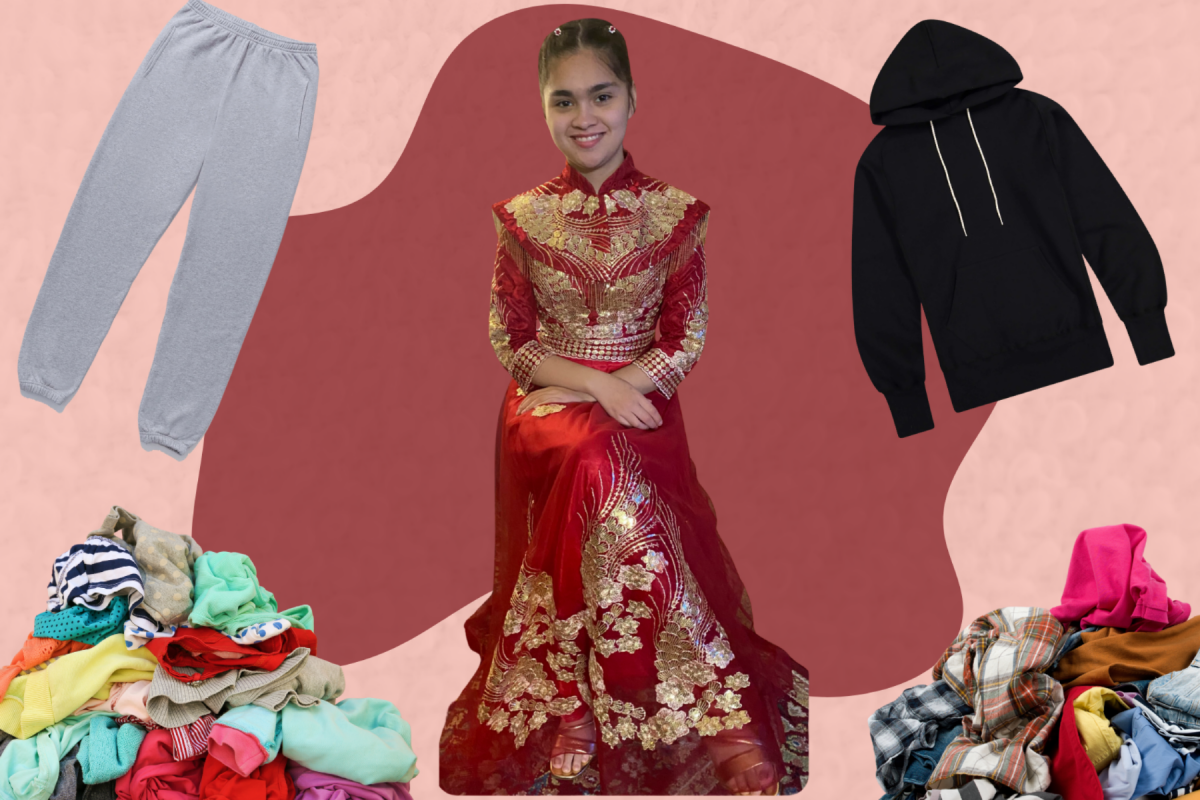
On the other hand, some juniors and seniors went to great lengths to carefully style themselves for the 2026 LSE Prom: Aphrodite’s Ball. One of those students was senior Jessye Tithin. Tithin decided that for prom it was more than just a dance. It was a time to show off her culture.
“[The dress] kind of reminded me of a Phoenix. It didn’t really fit the theme of Aphrodite’s ball, but I brought in the theme for myself,” Tithin said, “I was like ‘I can do mythology.’ And just do Asian mythology in general because that kind of tied back to my own culture.”
Tithin’s mother is from Micronesia and she has taken that part of her heritage to heart. That is a part of who she is, and, for her, it is important to show others that. Tithin said that, at prom, she received many compliments from other prom-goers about her dress.
“Getting all the compliments that I got. I honestly wasn’t expecting to receive a lot,” Tithin said. “I wanted to show where I’m from. [The dress is] beautiful, and it’s not just pretty to look at. It’s prettier to see what’s behind it,” Tithin said.
Tithin also has a dependable and consistent team behind her that share this view and gives her the feeling of confidence to do so. Her sister ensures her look is perfect when she is going out to represent herself and her beliefs. Her mother helps her with an important part of her look that at times can go overlooked: hair.
“We had to blow dry it, brush it out [and] straighten it. And we have to braid it, pin it up and then put all the decorative pins in for it and spray it. [M]y mom does my hair on special occasions and anyone can see the love she has for me in the designs,” Tithin said.
Choosing a look in the morning can be affected by any number of things. From the weather, income, from someone’s beliefs, what is happening that day, the color or too many things included in just one article.
For Tithin, clothing comes down to identity and representation. Al Khazraji feels similarly, and urges her peers to own their style.
“[J]ust be yourself, and don’t let specific barriers confine you in a specific social norm. And be who you are. Be authentic yourself unapologetically. That’s what I have to say,” AI Kaharzji said