In school there is always a place for everyone. Whether it’s being an academic-driven individual in the classroom or an athlete on the field, there is always an opportunity to feel a sense of belonging. Although there is a space for everyone, students rarely have a chance to branch out and have independence. Key Club is able to create that outlet where students can excel in leadership by accessing resources to integrate their role and voice in their local community.
Key Club is a student-led organization that prioritizes the endeavors of the student body. Normally, the club specializes in community-based projects, encouraging students to interact and build connections with the local organizations near them. At Southeast, the leadership team strives to create these opportunities for the members of the club by booking broader volunteer jobs, like People City Mission (PCM). Also, they have made strides towards implementing newer, unique projects as well.
Although the club today, as of 2026, is active with over 80 eager members, that wasn’t always the case at Southeast. Once Covid-19 struck the United States, seeping its way into Nebraska, it tore the Lincoln community apart. People were urged to completely isolate themselves for their safety. Key Club reacted similarly to other businesses, schools and organizations across the world, shutting down entirely.
Amanda Lukesh, who is a mathematics teacher at Southeast and is the sponsor of Key Club, clarifies that this wasn’t a decision that the Key Club members or faculty wanted to make, but for their own safety and government-based regulations, they had no choice.
“Everything just slowed down to where it was out of our hands,” Lukesh said. “The language that was being used for a solid year was ‘don’t get together’ and ‘don’t work together’. But I think out of Covid, we found that isolation is not the best for people and our community.”
Even though the club was forcefully shut down for a period of time, once the world transitioned back to normality, Southeast students put forth effort for its reopening. Generally, students wanted to serve their community in any way, so when that opportunity was stripped away for two years, they were enthusiastic to bring it back.
“There is an internal [feeling] within humans [where] we want to help each other when we see problems,” Lukesh said.
After the adversity students endured to officially reestablish the club, the connection was brought back to life. This sparked new ideas for projects that the club could undertake.
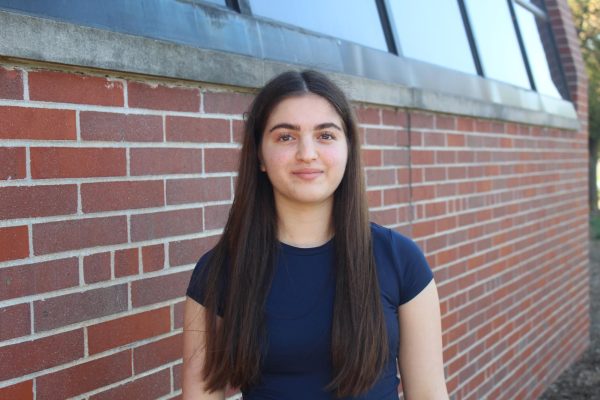
A standout student who has been an active member of the team and had a special project idea was Clio Baird (12). In her sophomore year she decided to join Key Club, to have a new experience and explore a club that her friends were always talking about. Throughout her first year as a member, she quickly realized that she could utilize this club and its purpose to make an impact across her community.
As she transitioned into her junior year, she decided it was time to branch out and try to secure a leadership position. Soon after applying, Baird was appointed as the Vice President. This way she could easily voice her opinions and ideas for the club.
“I had a lot of ideas of [what] I thought Key Club could do, or just ways it could improve, and I wanted to be part of that,” Baird said.
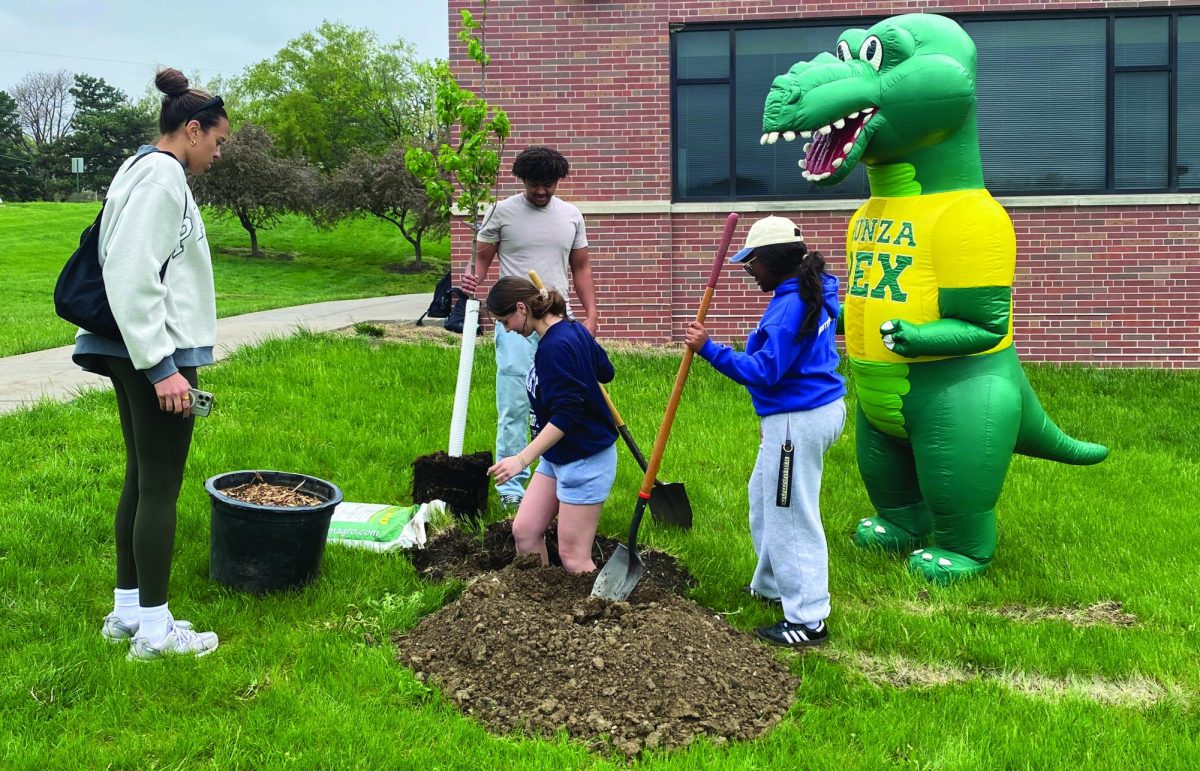
Baird had been thinking of new ideas, specifically for Key Club to organize, but she had also thought of another project she was passionate about: tree plantings around Southeast’s campus. Originally, she immediately turned to Neature Club, since they specialize in nature-based projects for the school and Lincoln. However, they weren’t able to give her the support she needed to begin the grueling project.
“I wanted to find a way to make a sustainable impact at Southeast, and at a high school, it’s hard to [achieve] that,” Baird said.
Even though Baird’s project wasn’t getting the attention it needed to officially launch, she wasn’t prepared to abandon it. She decided to turn to Key Club, and leverage her position as an officer to share her ideas.
“Between the officers, Key Club mindset, having the backing of Kiwanis and their support, we will try to make ideas come to fruition with guidance,” Lukesh said.
Key Club facilitated connections on the local level to bring the project to life. For Baird, this is what really mattered, even if that meant they couldn’t give extensive environmentally based support.
Following a year of continuous planning on behalf of Key Club, a partnership with Lincoln Parks and Recreation was facilitated for further guidance. They soon realized that to plant four trees was costly, reaching close to the thousands. To fundraise, they reached out to Runza, and even had Runza Rex show up to plant trees with them.
Overall, this has had a long lasting impact as Southeast, with Key Club being awarded with the Tree Campus K-12 Recognition during the 2024-25 school year, displaying their dedication to creating a greener high school campus. Not only has it benefitted Southeast’s environmental health, there has been a positive ripple effect throughout the community.
First, Runza posted a challenge on their Instagram, announcing that for every 10 likes they receive on the post, they will donate money to the Arbor Day Foundation, supporting sustainability. But not only was Runza inspired to help, other high schools across LPS – like Standing Bear – are initiating their own tree campus programs too.
This isn’t the only project that Key Club has ventured to try, because other students like Baird had thoughts to share. Max Fielder, who was the co-treasurer of Key Club and a graduating senior in the 2024-25 school year, found his purpose in the community. He wanted to establish Little Free Pantries filled with sanitizing products, menstrual products and other expensive necessities.
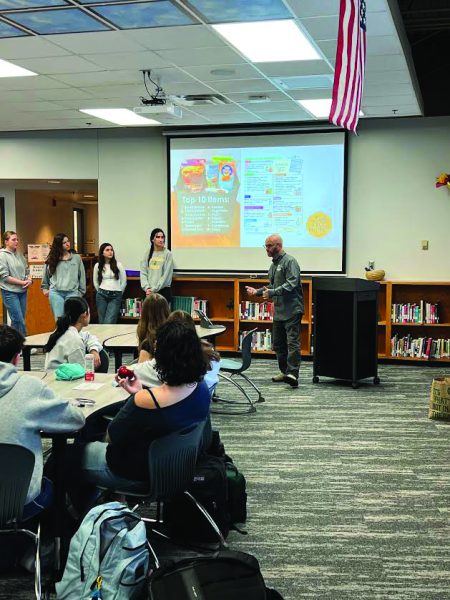
At first, this project didn’t run as smoothly as the tree planting. When the club submitted the grant the first year this idea was presented, they were rejected. Even through these challenges, the leadership team and Lukesh supported him throughout the process. However, this support looked a bit different from Lukesh compared to the others.
“My role [is that] I’m a guide and not so much a developer,” Lukesh said. “I’m getting them to think about what they want to see change.”
With that guidance and additional support, after Fielder graduated, the new leadership team put effort into submitting a revised grant, resulting in acceptance.
This is just the beginning for this Little Free Pantries project and even the tree planting. Both of these projects will live on to show the relentless dedication Key Club has for their school, but also their local community.
“The premise of having clubs within schools is to get students involved,” Lukesh said. “I think Southeast does a really good job of having a variety of clubs for all different interests, but Key Club is unique in reaching farther outside the walls.”