
Do you remember when you had to write argumentative essays in elementary and middle school? There were a few topics you could choose from, and school uniforms or dress codes were almost always an option. Back then, I always argued against them, believing that students should have the freedom to choose what they wear in order to express themselves. I still stand by that opinion today. But after observing what students wear to school now, I can’t help but feel that freedom has gone too far.
Let me be clear: I love having fun with what I wear. I find great joy in fashion, and I have no problem whatsoever with people having the autonomy to wear what they feel most comfortable in. After all, fashion is a facet of how people show who they are. But there is a line, and I believe students are crossing it.
Dress codes have a long history. They first popped up in schools during the early 1900s, dictating what students were and weren’t allowed to wear. If a student disobeyed these rules, they could receive detention or sometimes even suspension. One instance in 1969 even resulted in the infamous Tinker vs. Des Moines Supreme Court case. When students from Des Moines, Iowa wore black armbands to school as a method of protesting the Vietnam War, they were suspended. Parents sued the school because they believed their children’s right to free speech had been infringed upon. The school lost the case when it was taken to the Supreme Court, and this won students an important victory when it came to their First Amendment rights within schools. Knowing this, we can see that dress codes have been a point of contention for many years.
Over the decades, many restrictions have faded. Girls aren’t required to wear skirts, and boys are now allowed to wear denim in classrooms. As time goes on, what is considered modest or put-together is getting more and more lenient.
What I find problematic with our dress codes now is how radically they have changed. I still believe that students should have a modicum of restriction on what they are allowed to wear to school – within reason. But when I walk around LSE, I see girls wearing inappropriately revealing attire and all manner of students wearing pajamas when it’s not Pajama Day. I don’t quite understand how our schools have made such an about-face in such a short amount of time.
Looking at LPS’s official dress code, the “Common Practices for High Schools” document clearly states, “Clothing must cover undergarments and all private parts. All tops must have straps. All tops must meet the top of the waistline.” Yet too many students ignore these rules.
Bluntly put, I see girls walking around the hallways and sitting in classrooms wearing tops that resemble a sports bra, showing excessive cleavage or sporting shorts that leave their bottom hanging out. It is an unfortunate reality that, yes, these violations of the dress codes are a majority of the time done by girls in particular. I know many people won’t like to hear that, but it is the reality we live in.
This isn’t about policing style, it’s about appropriateness. Clothing meant for clubs or social media trends has no place in our classrooms. Dress codes exist to maintain a professional learning environment, yet enforcement at LSE appears inconsistent.
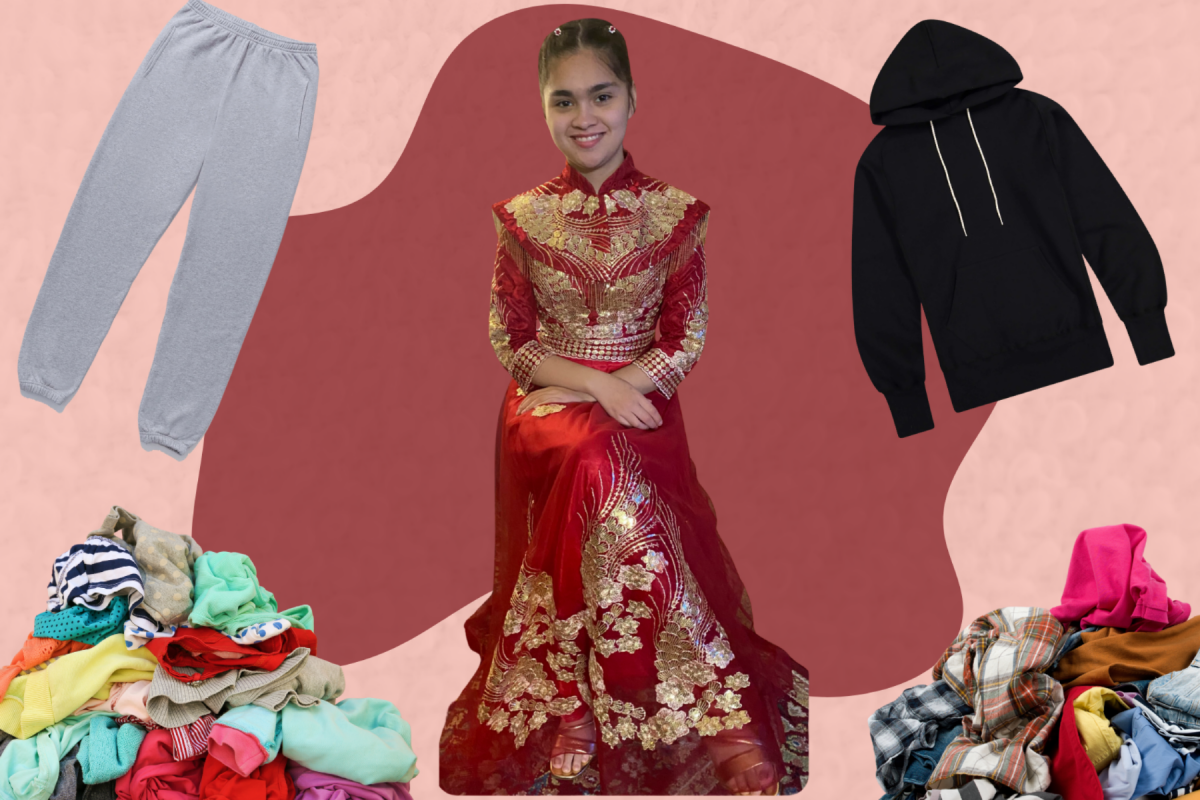
Besides the excessively revealing clothing I see many girls wearing, there is also the matter of how intensely casual teenagers dress. This has been a trend since lockdown in 2020 during COVID-19, and has continued ever since then. While I can appreciate the comfortable leggings-and-sweatshirt ensemble, I don’t feel like that belongs in schools.
I see school as a workplace environment, and they are, in a way; our parents or guardians go to work while us minors go to school for around the same duration of time. While we may not be making money, we are gearing up for the day when we do enter the workplace.
There is something to be said for “dressing for success”. Research on this idea has been done by Forbes, The Wall Street Journal and even the National Institute of Health. All of these studies have proven that dressing more formally can lead to higher confidence and improved performance, and even positively change others’ perceptions of you. Now, I’m not saying that you should wear a suit every day to school. I just think that there are little ways to enhance our attire and level up from sweatpants and a hoodie.
Another way to think about it is this: when we have full-time jobs (and I know many students already have part-time jobs), most businesses will not let a sloughy outfit slide while you’re on your shift. Even in job interviews, the manager is going to be analyzing your attire and how you present yourself, which most definitely influences their hiring decisions. Wearing nicer clothing can convey maturity and professionalism, two things we need to prepare ourselves for when we are in the adult world and must behave accordingly.
I know there are many people who will say that nicer clothing either isn’t comfortable or affordable. Well, I know for a fact that both of those things are not true. First of all, I regularly wear jeans, blouses, skirts, dress shoes and more – and I couldn’t be more comfortable. If this truly is your issue, you might not be getting the right size or style for you. When it comes to affordability, thrifting is always a great sustainable option that offers price-friendly clothing and a plethora of interesting pieces to choose from. I promise you, there are so many fashion options out there that if you look for it, you will find it.
I think the bottom line is this: our culture has gotten a whole lot more lax when it comes to fashion, in more ways than one. I do think that school dress codes should be moving with the times as well. After all, there’s no need for students in 2026 to look like they stepped out of the 1960s. However, schools should still retain some ground rules that make sure students aren’t showing up to school wearing clothes resembling what women wear now to the gym (yes, most of you have probably seen those ridiculous workout sets on social media). We are still trying to foster a learning environment after all and, as I mentioned previously, that can be achieved best when wearing more professional clothing.