
Nearly one in three people live with some form of vision difficulty, yet many online school materials remain difficult for them to access. Design choices such as poor color contrast, hard-to-read fonts, unclear links and missing captions can prevent students with vision or hearing disabilities from fully engaging with assignments. For students who are blind, the absence of alt-text can make essential resources completely unusable. As classrooms become increasingly digital, accessible design is critical to ensuring every student has equal access to learning.
Updates to the Americans with Disabilities Act (ADA), announced in April 2024, now require schools across the country to make their online documents and web content accessible to all users. These changes will start going into effect by April of this year, with librarians leading the training efforts to help teachers understand and apply the new regulations.
These changes will impact those who are visually impaired.
“Blind students will be able to compete at the same time with their sighted colleagues,” said Executive Director of the Nebraska Commission for the Blind Carlos Servan.
At LSE the training for this will start with a representative from each department. Librarian Sara Friest will teach these individuals how to understand and implement these changes using several planning periods in February and March. Then, the representative from each department will teach the rest of their department.
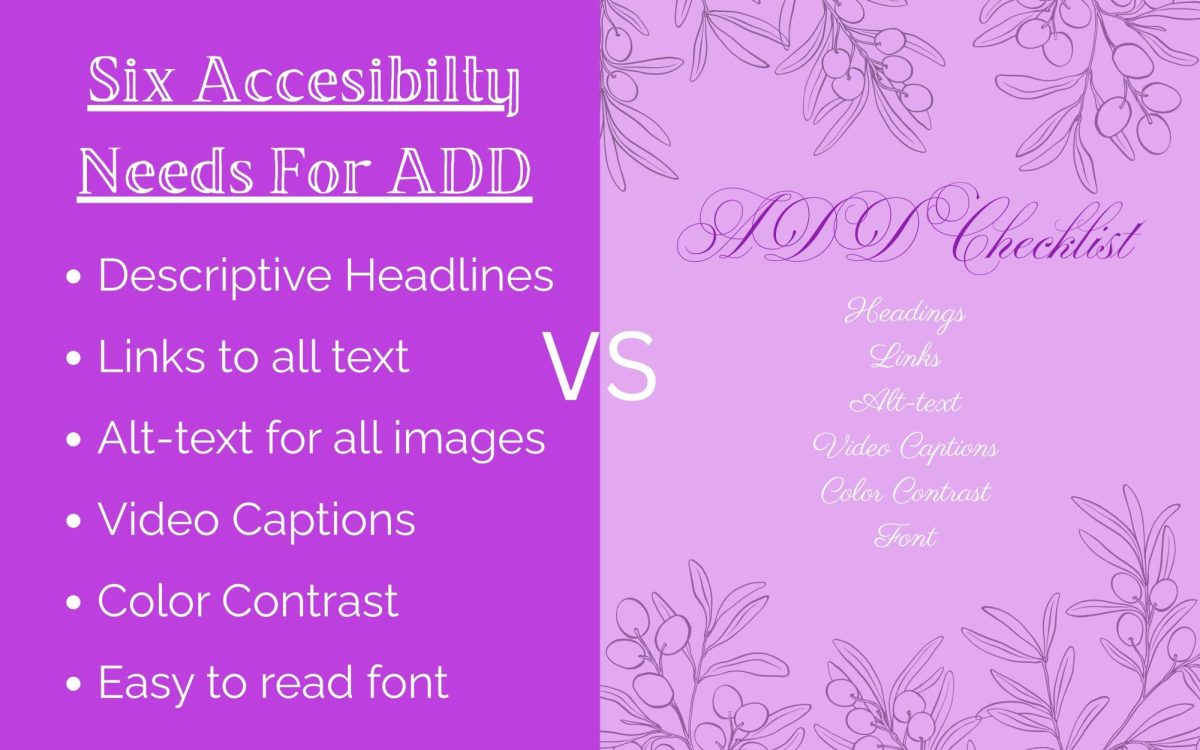
Friest said that there are six main things teachers can focus on when making sure all documents follow the new ADA regulations. These include using clear and descriptive links for text, providing alt-text for images, using clear and descriptive headings, providing video captions, having strong color contrast and a comprehensive and structured reading order.
“Sometimes it’s just hard to find a link,” Servan said.
For many educators, the challenge is not understanding the guidelines but finding the time to revise years’ worth of existing materials to meet the new standards.
“Most of us that have taught for a long time have tons of digital materials, and we’re being told that we have to update every single one of them, which is a huge task,” Friest said.
Although this task is considerable, time will be given to teachers to complete it.
“I don’t think anyone expects that everything will be ADA compliant by April of 2026, but we should have changes in place that lead to better habits and practices,” said LPS Director of Library Services, Chris Haeffner. “Everyone panics when they first learn about it, but eventually as they learn the steps towards updating resources to be compliant, they realize it’s not such an impossible thing to do. It will take time and new learning, and we can do it.”
Several tools are available to help streamline the process, including Grackle Docs. The program scans documents to ensure that headers are in the correct order, verifies that images use alt-text and checks that all links make sense even out of context.
Despite the challenge these changes pose, Friest emphasized that these changes are necessary as they ensure equitable access for students and families. Not only that, but accessible design benefits everyone, not just those with disabilities. Friest compared the shift to curb cuts on sidewalks, which were originally installed for wheelchair users but now help parents with strollers, runners and delivery workers alike. When barriers are removed, access expands for all.
“Blind parents will be able to help their children with their homework or take a look at the reports or talk to the teachers, because everything is that way [digital] now,” said Servan.
Although the transition may require time, effort and planning, both Friest and Haeffner believe that these changes are an important and necessary step towards equality.
“In LPS we believe that ALL means ALL. That’s not just a slogan; we live by it and we make many decisions in service to that motto,” Haeffner said. “When it comes to accessibility, we can’t ignore that a certain number of students, families and community members can’t effectively use the resources we provide. While the process of change may be hard and uncomfortable, it’s the right thing to do.”