On Feb. 13, 2026, President Donald Trump revoked the 2009 EPA Endangerment finding. This finding deemed certain greenhouse gases to be a threat to public health. With this reversal, companies no longer have to regulate their greenhouse gas emissions, and can therefore prioritize profits over the health of our nation’s people.
This historic policy change reflects a negative shifting tone within American society. Aside from the world of politics, we can see similar movements arising on social media.
But it wasn’t always this way.
2020 was an interesting year for many reasons. It was the year that the world’s sense of normalcy collapsed in the face of the COVID-19 pandemic, and where global lockdowns caused internet and social media use to increase by 321 million users worldwide according to a February 2020 Forbes article by John Koetsier.
It was also the year that a unique online trend sparked: the VSCO girl. The VSCO girl was a caricature of teen girls everywhere, with recognizable markers like their Hydroflask brand water bottles or the scrunchies on their wrists. But lying under this superficial aesthetic was a distinct pro-environmentalism tone.
They promoted reusable metal straws and eco-friendly brands, and their famous saying promoting reduced aquatic plastic waste, “Save the turtles!,” has become more than an internet meme.
In 2025, the International Union for the Conservation of Nature (IUCN) raised the status of green sea turtles from “Endangered” to “Least Concern,” largely crediting conservation actions in recent years, especially as a result of social media, as stated in a November 2025 Lifestyle Inq. article by Steffani Samson.
This major achievement in the world of wildlife conservation reflects the impact that youth culture movements on social media can have on real life.
However, while this environmental win was recent, the current trends running rampant on social media indicate that we won’t be seeing many more like that in the future.
OVERCONSUMPTION
As a casual user of social media, one of the trends that seems hardest to ignore is consumerism. It seems like every other video is some type of wealth-flaunting, overconsumption of some product, or an ad. This makes sense to an extent, as the goal of influencers on social media is to influence, usually via convincing you to buy a product they earn commission on.
But to me, it is clear that this issue has gone far beyond minor purchasing of things you don’t need.
There are countless examples of these products, but one of the most recent is the viral squishy dumpling toy, popularized by influencers across social media platforms. Essentially, people will buy these toys in large quantities, so much so that they will sometimes buy out entire stocks in stores, just to get a change at the “mystery glitter dumpling.” These toys come in a variety colors, but often influencers who don’t get the “mystery” color, will simply throw these toys away, fueling repeated overconsumption and mass waste.
An additional example of this consumerism lies in the surge of “haul” content across social media. Influencers post videos of their trips to various stores, creating a spectacle focused on the amount and high price of all of their items. This represents yet another harmful narrative pushed on social media; the same one pushed by capitalism, and the same one that hurts the environment: the idea that what you have is never enough.
I have been personally influenced by this narrative. For a time, I would go shopping with my friends, and would feel a sense of sorrow if, upon coming home, I would have one or even no new items to show for the trip. Even though maybe I’d looked and found nothing I truly wanted, or was deterred by prices, I felt influenced. If I posted on social media, my haul would be boring, and a waste of time. This same influence is affecting people all over, and can often be perpetuated by the impact of incredibly popular but short-lived microtrends.
MICROTRENDS
Microtrends, very recognizable for their “-core” suffix and their fixation on the trend of one particular item or style. The defining factor of a microtrend in itself is that its virality is short-lived, meaning that it soon could be considered out of style. One study found that “39% of Gen Zers are directly influenced to purchase an item after seeing it on TikTok,” according to Sofia Baracskai in a June 2022 article from The Drum.
So, the trends are angled toward the overconsumption of unsustainable companies, such as fast fashion brands, leading to acute production for a point in time.
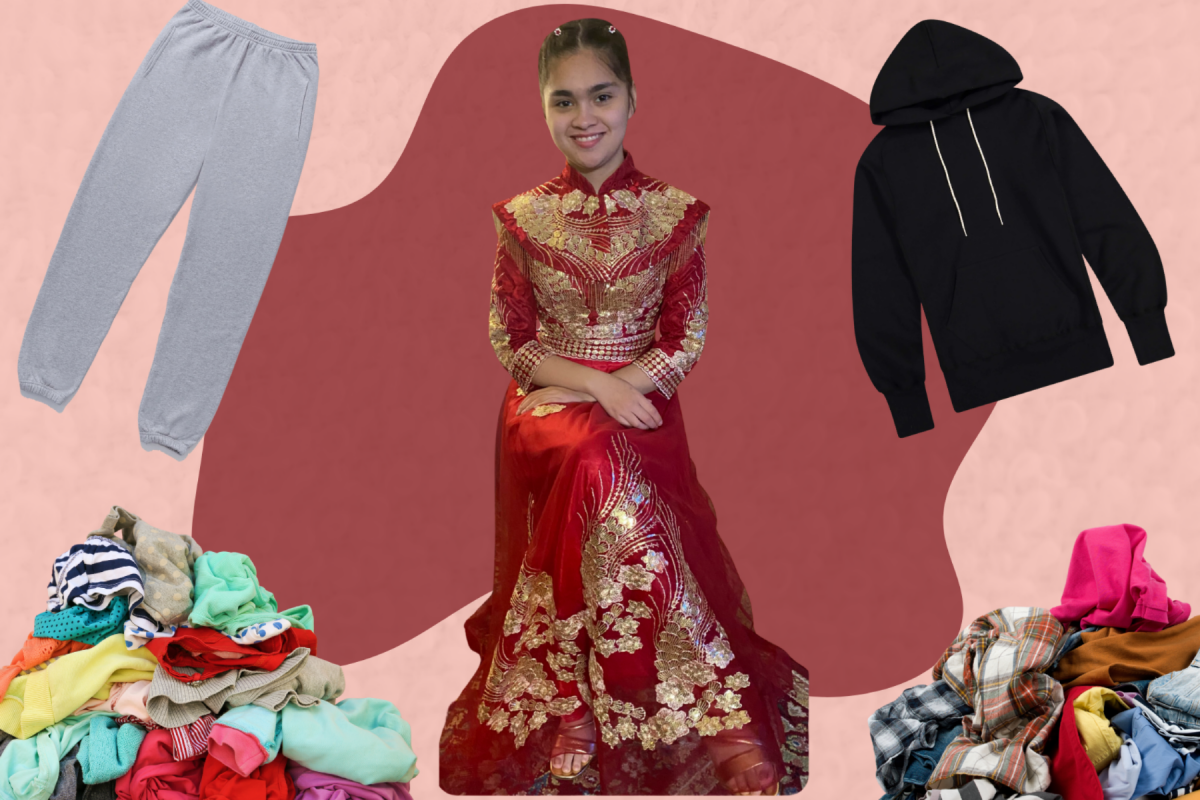
This year, Earth.org shared that the world consumes around 400% more clothing than twenty years ago. This shocking number is certainly attributed to the impact of social media, and the cycle of trends and virality that it pushes. However once the trend has ended, our landfills are left with the remnants of what was once popular. Earth.org continues to share that the fast fashion industry is responsible for 10% of carbon emissions worldwide, and is the second largest consumer of water.
Another increasingly prominent consumer of water is generative AI.
GENERATIVE AI
Generative AI is a version of AI in which users input prompts for the AI model to create text, images, and video primarily. It has become increasingly accessible and realistic, creating fake images and videos with the push of a button. While a lot of the output from this access has resulted in Tung Tung Tung Sahur and Ballerina Cappucina, it also represents something far more damaging.
In a 2025 study, The Pew Research Center found that 64% of teens say they use chatbots, including about 3 in 10 who do so daily. The UN Environmental Programme, a group that studies climate and sustainable development, warns that AI data centers use significant amounts of water and emit heavy amounts of carbon from their energy use.
The problem is not that these harms are unknown by my generation, it is that for some reason, we don’t seem to care. I was personally informed about the environmental dangers of AI through social media itself. It is necessary to state that there is still positive activism happening on social media, and that there are still movements working toward positive change.
But what is imperative to understand is that social media is a reflection of our society. At the height of environmentally focused politics, we saw correlating social media trends. But now, in our time of political deregulation, we see consumerism and willful ignorance.
However, everyday teens on social media shouldn’t be blamed for an environmental crisis. In fact, I too have been influenced. I’ve used Chat GPT more than I should, and I own too many clothes that I bought on a whim and wore once. But, we should recognize the impacts that our everyday actions have on the natural world, and how we may be getting influenced by our cultural circumstances.
We’ve seen the positive power of social media in the past. We have the opportunity to facilitate change. Don’t let that opportunity be taken lightly.