
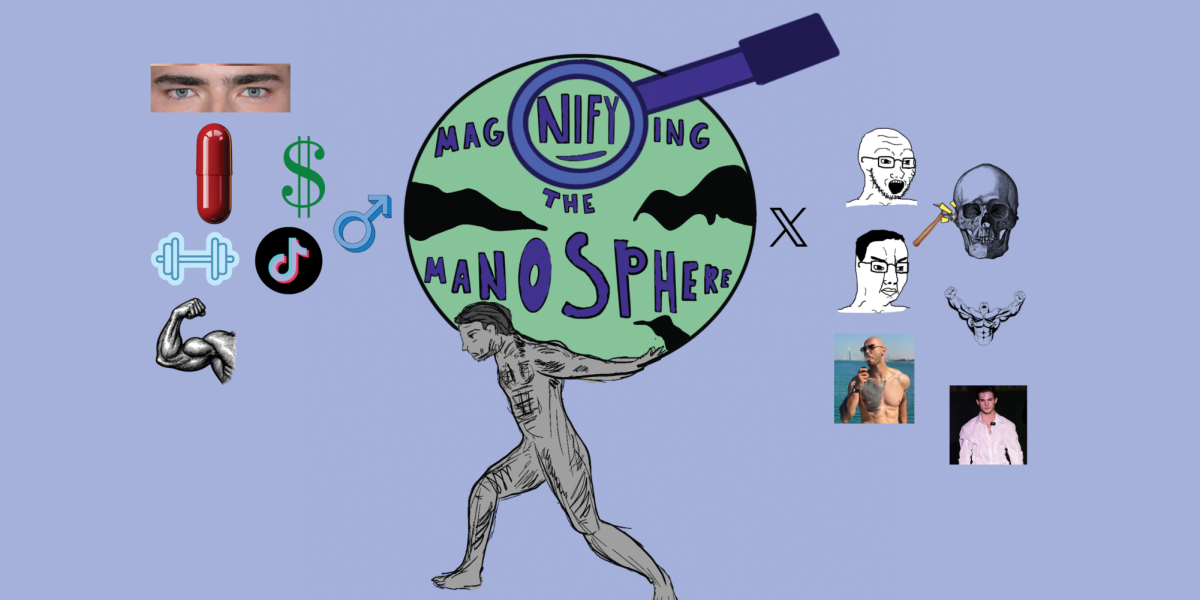
Chud, Chad, Maxxing, and Mogging are common words heard throughout LSE’s halls. These terms have become a part of people’s everyday vocabulary, but their origin is much more complex than casual internet slang. They come out of the “Manosphere”, where discussions and arguments on true “masculinity” run rampant.
The term “manosphere” refers to a loose network of online forums, blogs, podcasters, influencers and communities centered around the concepts of masculinity and gender roles. According to UN Women, this area of the interwebs holds high appeal for young men. The manosphere is framed as a place for self-improvement, meant to help young men become more fit, confident, disciplined and, overall, more successful. A report by BBC explains how this can quickly devolve into toxic masculinity, promoting harmful ideals and misogynistic viewpoints. Due to these two different sides co-existing, it is easy for people to trip over the line between them without noticing.
However, like any toxic relationship, the manosphere is attractive to young men for all the wrong reasons.
“Young men kind of have a sense that they’re getting a raw deal,” English teacher and Debate coach Colten White.
This so-called raw deal is a mix of several different things. With the current economy, the job market is suffering. It is harder to find a job, and almost impossible for a single income household to exist. According to the Washington Post, it is also far harder to buy a house, with the average age of homeowners having risen to 38 from 28 in the past 30 years. This can lead to young adults feeling like they are at a disadvantage, and the common decrease in the standard of living can feel emasculating. That feeling is often tied to what manhood should look like, especially the idea of financial stability, strength and confidence as markers of success. When young men fail to meet these expectations, it can create a sense of falling behind previous generations that were able to achieve this.
According to Kirk Svendsen, a Government and Politics teacher at LSE, some of what can fuel or feed this is frustration. “[People look for a] scapegoat or someone else to blame if they are unhappy with how things are going,” Svendsen said.
These economic frustrations are a big part of why the manosphere is gaining so much traction online.
“Economic stability is one of the biggest reasons that we make the political decisions we do,” Svendsen said. “If things are seen as not going well, if the economy is not going well or if unemployment is up, people might look for alternative viewpoints.”
According to an article titled “The Guardian view on gen Z: Young men hold startling views about women – inequality may be to blame”, combine that with the recent rise in awareness for minority issues, and young men often feel like they are being ignored and devalued. They feel that the rise in things like gender inequality has gone too far, and caused them to be left behind. This feeling can cause them to lean on “Alpha Male” influencers like Andrew Tate who promote themselves as examples of extreme success and confidence, appealing to those who are uncertain. Influencers like Tate are fit and rich, telling young men that if they follow their advice, they can be too. However, they frame masculinity in rigid terms, with status, wealth and dominance being the main indicators of a man’s value. This messaging can often feel motivational, but it promotes unrealistic expectations and often overlaps with misogynistic narratives that portray women in a negative or dismissive way.
These ideals are spreading quickly on social media, becoming more and more mainstream. Platforms like TikTok, Youtube, Twitter and Instagram turn radical ideologies into everyday memes and terms. Concepts like “looksmaxxing” (an obsessive focus on the pursuit of physical self-improvement and attractiveness) and “alpha males” (a dominant man, something to aspire to) provide a gateway for young men to enter redpill content and the manosphere. Redpill content is increasingly popular, and is a major part of the manosphere. The content frames reality around the idea that society is rigged against men, and that “waking up” to this truth is the only way to survive and thrive. It’s an ideology that strays from just self-help to becoming a political belief. Once someone enters these spaces, the online algorithm, which is focused on engagement, pushes increasingly reactionary content. It moves from simple fitness and self improvement advice to more extreme views on gender and society.
“The alternative media systems that people get more of online skew very heavily in a reactionary perspective,” White said. “If people develop the worldview that feminism and women’s rights is the biggest cause of problems in the world they’re going to go in a more reactionary and conservative direction.”
This new digital age has increased group polarization, making it easy for people to only surround themselves with those who confirm what they already believe.
“Online people are able to find communities that might be too small to exist without the whole of social media bringing them together,” Svendsen said. “That leads them to find people that confirm prior biases… as they discuss some of those ideas among themselves, they become more and more extreme in their beliefs.”
The influence of the manosphere isn’t confined to just online spaces, but often leaks over into everyday environments including classrooms. It shows up in how people dress, speak and think.
“I’ve definitely had kids who espouse talking about how people are alpha or not, and like ranking people on that hierarchy,” White said.
The reality of the manosphere is that it thrives on a cycle of frustration and scapegoating, moving young men further away from empathy and deeper into a toxic masculinity online community. When young men start to buy into these ideologies, and interact more with these spaces, it can cause them to narrow their self-worth to wealth and dominance. When they find themselves unable to measure up to these impossible standards or match the fake online personas of men like Andrew Tate, the manosphere tells them to point the finger at others rather than the system itself.
“A lot of the young men are like, ‘I don’t know if it was worth it for other people to have that freedom if it trades off with my own importance,’” White said. “It causes them to blame or put down one group or try to diminish the value of one group in order to increase their own value.”