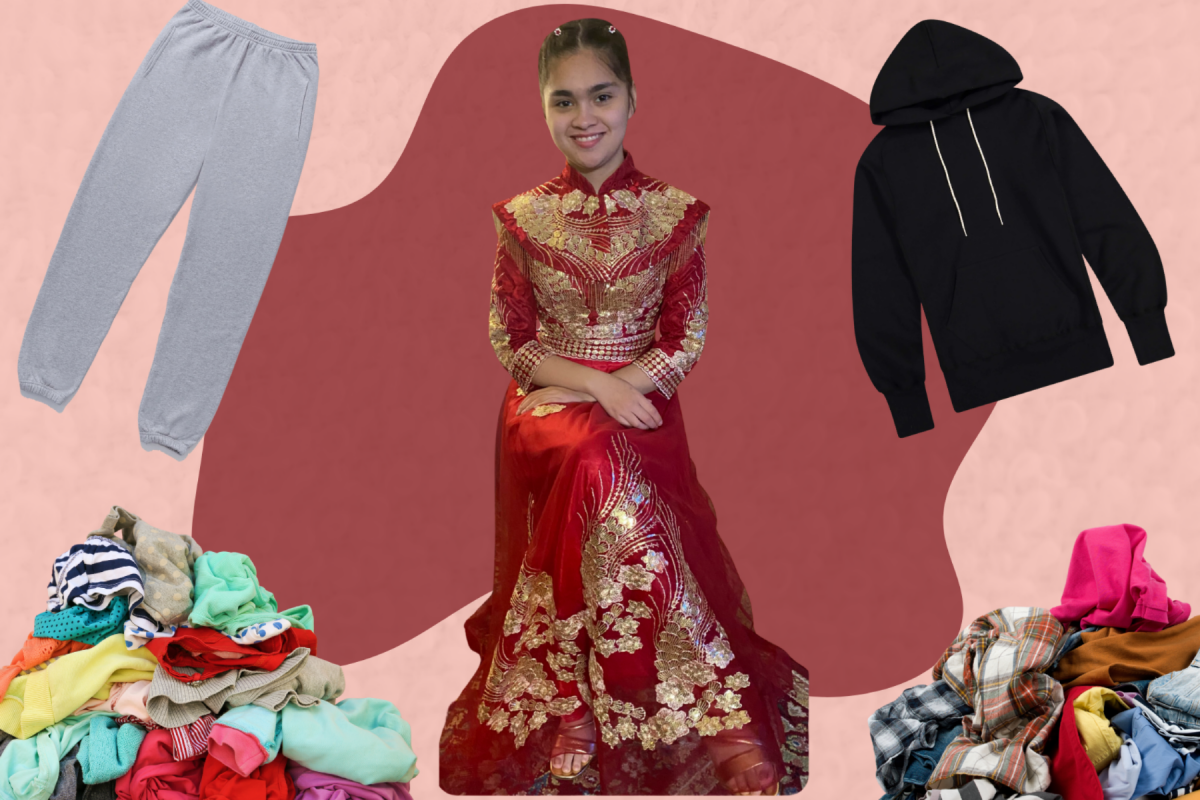

When you hear the word “house wife” you might imagine a 1950’s home maker. You might see the image of a white woman with pin curls, an apron cinched waist and a baby on her hip, sending her husband off to work with a kiss. As of the 21st century this image might seem like a thing of the past, but in actuality the “house wife” has reinvented itself as a desirable lifestyle once again.
While conservatism may mean empowerment, stability and praise for men, what does it mean for women? What role do individuals assigned female at birth have in a culture that overwhelmingly seems to praise traditionally masculine behaviors and traits? Now in the 2020s, all roads lead to the “Tradwife” phenomenon.
The term “Tradwife” is a merging between the words “traditional” and “wife.” It was coined on social media as a way to describe emerging influencers such as Nara Smith and Hannah Neeleman (Ballerina Farm).
Tradwives are individuals, usually young women, who prioritize being stay-at-home mothers who cook, clean and devote all of their time to serving their children and husband. The domestic labor they do is always tied up in a pretty bow of sundresses, minimal makeup and what is supposed to seem like effortless, eternal elegance and femininity.
Other than conformity falling into the public favor due to rising conservatism, what brought this about? In my opinion this is all a form of escapism. The economy has turned bitter and the American middle class is shrinking. When the average family is bombarded with inflation, gas prices, rising house and healthcare prices and low wages, the once standard single income household becomes impossible. It’s self soothing to give yourself up to a fad and pretend that real world problems don’t exist past your front door.
There is an element of elitism in having the opportunity to stay home and fulfill the role of a perfectly feminine homemaker. Being able to favor perpetual unemployment in an economy where most people live paycheck to paycheck on dual incomes is inherently glamorous. That is exactly why so many young women are becoming drawn to the tradwife movement.
Many might argue that under the concept of “Choice Feminism” (the belief that any choice a woman makes, regardless of how traditionally conservative it may be, is empowering) being a Tradwife is not inherently misogynistic. However, it is important to note that a culture which rewards and praises women who give up real and worthy aspirations and careers in order to serve a man is a male-centric construct.
During a time in America where there is so much division it’s easy to wish things were different. It’s not surprising that women want to escape to a simpler time by putting up a front not dissimilar to that of the 1950’s housewife, especially when they see women living out their domestic dream lives every time they open TikTok or Instagram. However, this idea that the 1950s was a simpler time is ignorant.
Other than being a highly oppressive and conformist time in history, the housewife movement never worked in the first place. The feminism that followed in the 60s wasn’t coincidental, it occurred because women were struggling under the expectation of perfection.
The new internet echo chamber that insists mothers and wives remain unfaltering is dangerous. Tradwife influencers purposefully choose not to include any sign of struggle. Smaller, emerging influencers follow in their footsteps and only show the highs of their lives. Soon enough, their audience of everyday women are bound to feel an alienating sense of shame when they can’t be as perfect as their idols.
Suddenly quick frozen dinners aren’t acceptable. Suddenly it’s humiliating to be behind on chores. Suddenly it’s a sin to get overwhelmed and mad when your kids have been acting up all day. Suddenly you’ve failed as a woman because you have to get a job to make ends meet instead of staying at home like every saintly tradwife online seems to.